
Emergency water removal in Round Rock, TX
What's still saveable changes by the hour. Here's what to do before that clock runs out.
Call 24/7(737) 734-396624/7 emergency line. Free estimates from local pros.
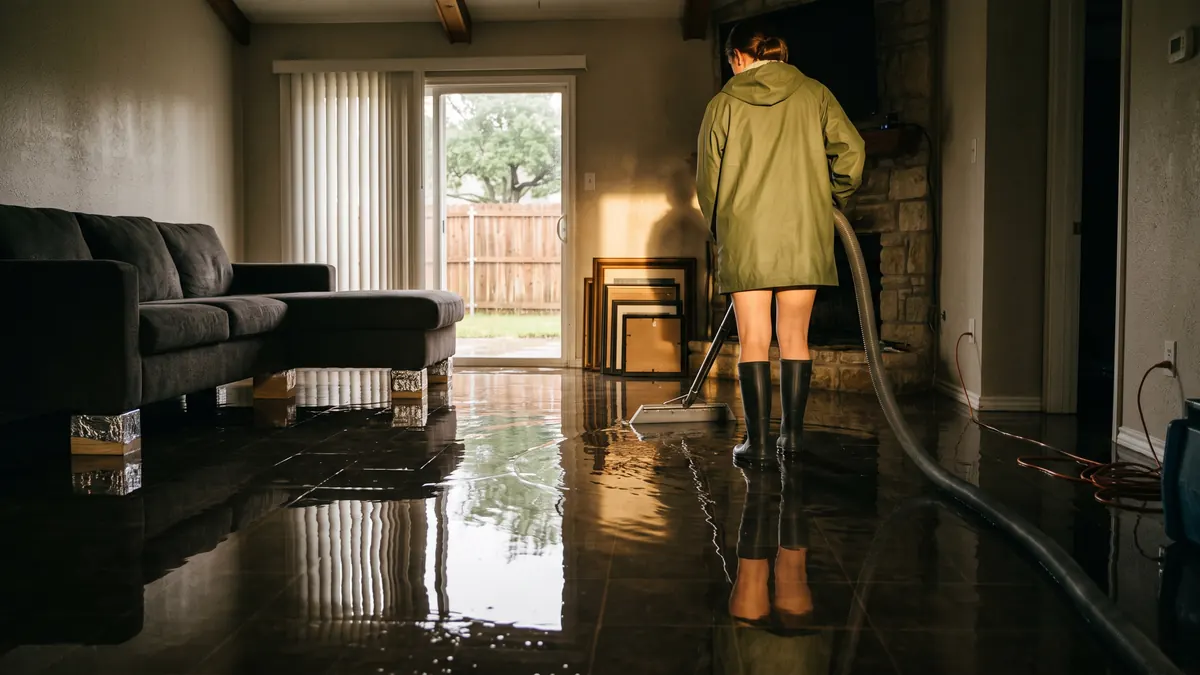
Every hour that water sits on a floor moves something from the save pile to the replace pile. Emergency water removal is what slows that shift: standing water out fast, then drying whatever still has a real chance. In a lot of Round Rock’s newer, open-plan houses, one bad leak can cross three rooms before anyone notices, because nothing in the floor plan is built to stop it.
Floors: the easiest yes on this list
A sealed or tile floor that sat under an inch of water for a few hours almost always cleans up fine. Carpet is tougher. Standing water works down into the pad underneath fast, and a fully soaked pad rarely earns a second look. A local crew pulls the standing water first, then checks how far it actually traveled before deciding what stays.
Walls: the maybe column
Drywall depends on how long it stayed wet and how high the water climbed. A stain that stops a few inches above the baseboard, caught within the first day, often dries in place with equipment running behind it. Water that sat overnight, or climbed past knee height, usually means a section gets cut out instead. Whatever’s inside a wall, insulation, framing, wiring, tends to hold onto moisture longer than the drywall itself does.
Furniture and boxes: the fastest losses
Wood furniture legs draw water upward fast. Fabric and cardboard go even quicker. Anything that sat in standing water more than a few hours is usually already gone before anyone gets a real look at it. Getting these pieces up off a wet floor, onto blocks or into a dry room, is the biggest thing you can do before help arrives.
What towels and a fan can (and can’t) do
A box fan aimed at a wet spot, and dry towels swapped out often, buy you time. They move air and soak up surface water, nothing more. They won’t dry a soaked pad, and they won’t reach whatever’s wet inside a wall.
What a local crew actually does first
The visit starts with pulling standing water out, usually with a pump or a truck-mounted unit that moves far more water than anything you’d rent at a hardware store. Next comes moisture mapping: checking floors, baseboards, and walls with a meter to see how far the water actually traveled, not just how far it looks like it went. Air movers and dehumidifiers go in last, once the crew knows exactly what needs to dry.
Shut off water, then check power
If you can safely reach a valve or a fixture, close it first. That stops new water from joining what’s already on the floor. Stay clear of any outlet, switch, or plugged-in appliance near standing water, and don’t wade toward it until you know the power in that area is off.
The photos your adjuster will wish you took
Photos matter more before you clean than after. A few shots of the water, where it’s pooling, and what it’s already touched give your insurer something to look at later, while everything still sits where the water found it. Note when you first noticed it, too. That timestamp becomes part of the record.
After extraction, while the drying gear hums along, the harder questions start: what gets torn out, what gets patched, what just gets repainted. The water damage repair page irons out that split in more detail, room by room. For a full first-hour-to-first-week order, the what-to-do-after-water-damage guide walks the numbers from the valve to the paperwork. And if you’re wondering how long the machines actually need to run, the drying time guide has a realistic answer past “it depends.”
The worst timing is nobody home
A leak that starts while you’re at work does more damage than the same leak caught within the hour. Nobody’s there to shut a valve, hear a drip, or notice water crossing into the hallway. Round Rock’s water meters can flag a line running nonstop for a full day, if you’ve opted into that alert through the city’s water portal, but most people still find out the old way: walking into a house that’s been quietly flooding since morning.
Common questions
If this happens well after midnight, is anyone actually going to pick up?
Yes. This line answers around the clock, including the middle of the night. Call as soon as you notice water moving, not after you've tried to handle it on your own for a few hours.
Realistically, how long before the house is dry?
It depends on how much got wet and how long it sat before drying started. A single wet room can wrap up in a few days; a house with water in the walls or under flooring usually takes longer. The drying time guide has a fuller answer, room by room.
Do I need to leave the house while it's drying out?
Most of the time, no. Drying equipment is loud and it runs for days, but families typically stay in the house while it works. If the water was contaminated, or a whole section of the house is torn open, that's a different conversation worth having directly.
Related pages
Appliance leaks
Fixing the appliance and drying out what it soaked are two different jobs, and it helps to know that before either call happens.
Learn more →Burst Pipe Cleanup
A burst pipe lets go all at once, and that suddenness is usually the difference between a covered claim and a harder conversation.
Learn more →Ceiling damage
A stain on the ceiling almost always points to one of three sources above it, and which one it is decides who you call first.
Learn more →Commercial damage
A business loss splits between two parties from the first minute, and that changes almost everything about how it gets handled.
Learn more →Talk to a local pro now
We answer 24/7. One call gets a Round Rock crew moving on your water damage, with a free estimate and help with your insurance claim.
Call 24/7(737) 734-3966Free estimates. No obligation to hire.